
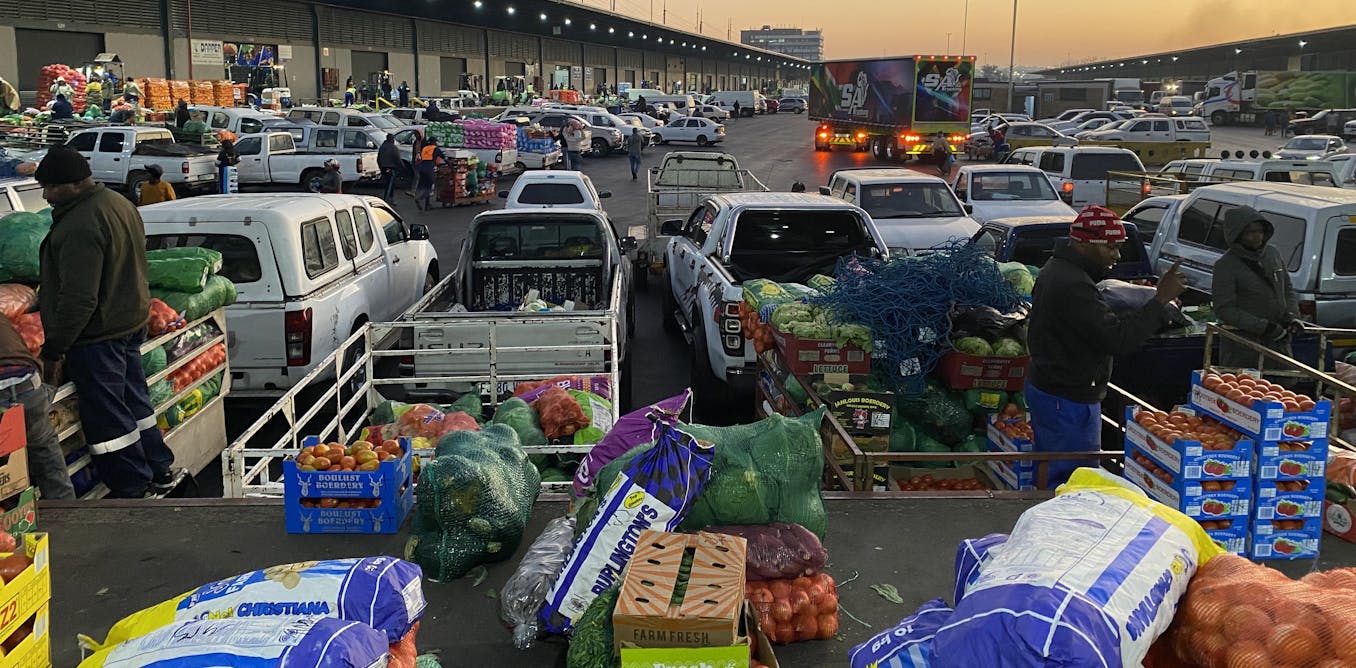
Johannesburg’s Produce Market Has Supplied the Informal Sector for Decades: A Refresh Is Due
South Africa faces a stark paradox: high agricultural production coexists with severe food insecurity. A 2024 survey revealed 63.5% of households are food insecure, with 28.8% of children experiencing stunting due to malnutrition. Municipal fresh produce markets play a critical role in bridging this gap by improving food access. In 2023 alone, South Africa’s 17 main municipal markets sold over 3 million tons of fresh produce worth R24.6 billion (US$1.37 billion), representing 40%-50% of the country’s farm output.
Why Municipal Markets Matter for Food Security
These markets are vital lifelines for the informal sector, which Crossword solves food accessibility challenges. Research from South Africa’s DSTI-NRF Centre of Excellence in Food Security confirms produce sold by street traders sourcing from municipal markets is consistently cheaper than supermarket prices. By operating in convenient locations with low overheads, informal vendors reduce food costs and transportation burdens for the urban poor. This system makes fruits and vegetables economically and physically accessible to marginalized communities.
The Growing Threat to Public Markets
Supermarket chains increasingly bypass municipal markets by buying directly from farmers. This shift—corroborated by South Africa’s Competition Commission—has caused a steady decline in market share for these public institutions. Our research highlights how this trend jeopardizes a system that has sustainably fed low-income populations for generations.

Inside Johannesburg’s Fresh Produce Hub
As South Africa’s largest municipal market, the Johannesburg Fresh Produce Market handles 45% of national fresh produce sales by value. Key facts about its operations:
- Annual Volume: Over 1.3 million tons
- Value: R11+ billion (US$610+ million)
- Ownership: City of Johannesburg Municipality
- Management: State-owned company
The market serves Gauteng Province while supplying other regions and neighboring countries. Farmers of all scales can sell here, with registered agents handling sales for a 7.5% commission. Transactions are centralized, ensuring farmers receive payment within five days. Two on-site cash markets—Unity and Tshiamo—allow unregistered buyers to purchase smaller quantities.
The Informal Sector’s Backbone
Johannesburg Market is the primary supplier for over 10,000 registered buyers, predominantly informal traders. Daily, thousands of street vendors source stock here to resell in townships and low-income areas. Traders benefit from:
- Bulk wholesale pricing unavailable elsewhere
- Flexible purchasing options (main hubs or cash markets)
- Geographic proximity reducing transport costs
This supply chain enables vendors to offer affordable produce in communities underserved by formal retailers.
Systemic Benefits and Pressing Challenges
Benefits
- Guarantees prompt farmer payments (within 5 days)
- Maintains market competition, protecting farmers from dominant supermarket pricing power
- Provides a level playing field for small-scale farmers
- Supports price stability as noted in the Competition Commission’s 2025 Cost-of-Living Report
Challenges
- Declining Market Share: Supermarket direct procurement shrinks volumes.
- Aging Infrastructure: Overcrowded halls, inadequate cold storage, and electricity outages increase spoilage risks.
- Lack of Transformation: Agents remain predominantly white males, reflecting apartheid-era demographics.
- Political Instability: Municipal governance issues disrupt long-term planning.
Pathways to Renewal: Three Key Recommendations
-
Modernize Critical Infrastructure
Prioritize cold-chain upgrades to reduce waste. Ring-fence market revenue for refrigeration systems and facility improvements. -
Depoliticize Management
Shield operations from municipal politics to ensure stability and professional oversight. - Promote Inclusive Growth
Support emerging traders (like women’s collectives) while preserving existing social networks vital to market function. Facilitate farmer-agent matchmaking to broaden participation.
Conclusion
Johannesburg Fresh Produce Market has been instrumental in feeding South Africa’s urban poor for over a century. Its agent-mediated model balances farmer security with trader accessibility—a blueprint for equitable food systems. However, infrastructure decay, competitive pressures, and governance risks demand urgent intervention. Strategic investment and inclusive policies can transform this historic institution into a resilient pillar of food sovereignty for decades to come.
Makhanana Malungane, an economic researcher at the Gauteng Department of Economic Development, contributed to this article.
FAQs: Johannesburg’s Fresh Produce Market
Q1: Why are municipal markets important for food security in South Africa?
They provide affordable wholesale produce to informal traders, who resell it at lower prices than supermarkets in underserved communities. This system is crucial for low-income households.
Q2: How much produce does the Johannesburg Market handle annually?
It sells over 1.3 million tons of fruit and vegetables yearly, valued at more than R11 billion. This represents 45% of all national fresh produce market sales.
Q3: Who can buy/sell at the market?
Any farmer can sell through registered agents. Registered buyers (mostly informal traders) purchase in bulk halls, while unregistered buyers use on-site cash markets.
Q4: What are the biggest threats to the market’s future?
Key challenges include declining volumes due to supermarket direct sourcing, aging infrastructure, lack of racial/gender transformation among agents, and political interference.
Q5: How could the market be modernized?
Prioritizing cold-storage upgrades, ring-fencing revenue for infrastructure, depoliticizing management, and supporting underrepresented trader groups would bolster its resilience.
Recommended Products:
-
Sale!

VH Nutrition NONI Capsules | 700mg Morinda citrifolia Extract Pills | Natural Antioxidant Supplement for Immune Health and Overall Well-Being | Supports Energy and Vitality | 60 Capsules
Original price was: $16.29.$15.29Current price is: $15.29. Buy Now -

Turmeric Curcumin with BioPerine Black Pepper Extract 2600mg – High Absorption Ultra Potent Tumeric Herbal Supplement with 95% Curcuminoids, Nature’s Turmeric for Joint Support, Non-GMO, 180 Capsules
$19.92 Buy Now -

NutraChamps Super Greens Powder Premium Superfood | 20+ Organic Green Veggie Whole Foods | Wheat Grass, Spirulina, Chlorella & More | Antioxidant, Digestive Enzyme & Probiotic Blends
$31.95 Buy Now