
When Can You Find Out the Sex of Your Baby?
When it comes to finding out the sex of your baby, there isn’t one single test that is used for everyone. So, if you want to know the sex ahead of time, your doctor can use different tests at different stages of your pregnancy.
Possible Ways to Learn Your Baby’s Sex
But while all of these tests are reliable, they’re not all suitable for everyone. Some of them carry significant risks. For most of the tests listed, finding out the sex is a secondary benefit while the test looks for other information.
In vitro Fertilization with Sex Selection
If you’re planning in vitro fertilization (IVF), there’s an option to choose the sex of your baby in conjunction with this procedure. IVF assists with fertility by combining a mature egg with sperm outside of the body. This creates an embryo, which is then implanted in the womb.

If you choose, you can have the sex of different embryos identified, and then only transfer the embryos of your desired sex. This might be an option if it is important to you to have a child of a certain sex.
Sex selection in conjunction with IVF is about 99 percent accurate. But, of course, there’s the risk of multiple births with IVF — if you transfer more than one embryo to the uterus.
Non-invasive Prenatal Test
A non-invasive prenatal test (NIPT) checks for chromosomal conditions like Down syndrome. You can have this test starting at 10 weeks of pregnancy. It doesn’t diagnose a chromosome disorder. It only screens for the possibility.
If your baby has abnormal results, your doctor may order further tests to diagnose Down syndrome and other chromosome disorders. For this test, you’ll provide a blood sample, which is then sent to a lab and checked for the presence of fetal DNA linked to chromosome disorders. This test can also accurately determine the sex of your baby.
You’ll need the NIPT if you’re at high risk of having a baby with a chromosome abnormality. This might be the case if you’ve previously given birth to a baby with an abnormality, or if you’ll be over the age of 35 at the time of delivery.
Because this is a non-invasive test, giving a blood sample doesn’t pose any risk to you or your baby.
Chorionic Villus Sampling
Chronic villus sampling (CVS) is one genetic test used to identify Down syndrome. This test removes a sample of chorionic villus, which is a type of tissue found in the placenta. It reveals genetic information about your baby.
You can have this test as early as your 10th or 12th week of pregnancy. And because it has gene information about your baby, it can also reveal the sex of your baby.
Your doctor may advise CVS if you’re over the age of 35 or if you have a family history of a chromosome abnormality. This is an accurate test for finding out the sex of the baby, but it does involve some risks. Some women have cramping, bleeding, or leak amniotic fluid, and there’s also the risk of miscarriage and preterm labor.
Amniocentesis
Amniocentesis is a test that helps diagnose detect developmental issues in a fetus. Your doctor collects a small amount of amniotic fluid, which contains cells that indicate abnormalities. The cells are tested for Down syndrome, spina bifida, and other genetic conditions.
Your healthcare provider may recommend an amniocentesis if an ultrasound detects an abnormality, if you’ll be older than 35 at the time of delivery, or if you have a family history of a chromosome disorder. You can have this test around 15 to 18 weeks of pregnancy, and it takes about 30 minutes.
First, your doctor uses an ultrasound to determine your baby’s location in the womb, and then inserts a fine needle through your abdomen to withdraw amniotic fluid. Risks include cramping, bruising, and spotting. There’s also a risk of miscarriage.
Along with detecting birth defects and other abnormalities with your baby, an amniocentesis also identifies the sex of your child. So, if you don’t want to know, make this known before testing so your doctor doesn’t spill the beans.
Ultrasound
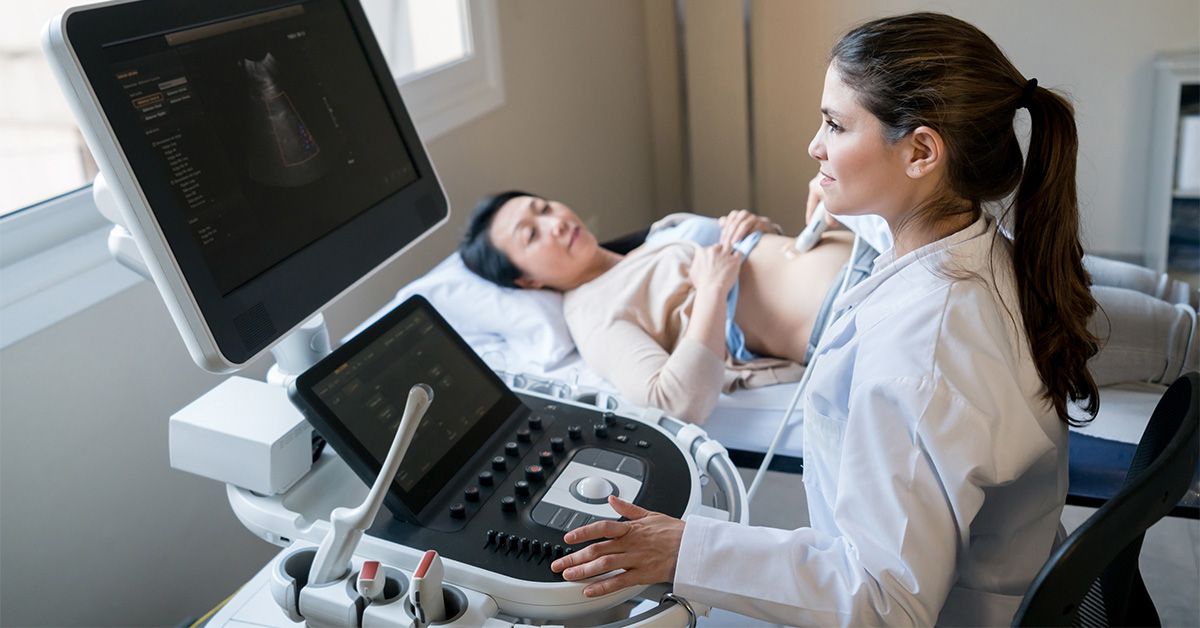
An ultrasound is a routine prenatal test where you’ll lie on a table and have your stomach scanned. This test uses sound waves to create an image of your baby, and it’s often used to check your baby’s development and health.
Since an ultrasound creates an image of your baby, it can also reveal the sex of your baby. Most doctors schedule an ultrasound at around 18 to 21 weeks, but the sex may be determined by ultrasound as early as 14 weeks.
It’s not always 100 percent accurate, though. Your baby might be in an awkward position, which makes it difficult to clearly see the genitals. If the technician can’t find a penis, they’ll conclude that you’re having a girl and vice versa. But mistakes do happen.
At-home Testing Kits
Along with traditional methods, some people have a positive experience using at-home kits marketed as “early baby gender blood tests.”
Some of these tests (according to claims) can determine the sex as early as 8 weeks, with about 99 percent accuracy. However, these are claims made by the companies and there isn’t research to back up these statistics.
This is how it works: You take a sample of your blood, and then send this sample to a lab. The lab checks your blood sample for fetal DNA, looking specifically for the male chromosome. If you have this chromosome, you’re supposedly having a boy. And if you don’t, you’re having a girl.
Keep in mind that when sending samples through the mail to an unknown lab, there are many factors that may reduce the reliability of the results. These tests tend to be expensive, so you may want to consider whether they are worth the cost for you.
Old Wives’ Tales
Some people even use old wives’ tales to predict their baby’s sex. According to folklore, if you’re extra hungry during pregnancy, you’re probably pregnant with a boy. It’s believed that extra testosterone secreted by a baby boy increases appetite.
There’s even the belief that a higher fetal heartbeat (over 140 bpm) means you’re having a girl. And that you’re carrying a girl if you’re forgetful during pregnancy. Some even believe that you’re having a boy if your belly is low and a girl if your belly is high.
But while old wives’ tales are a fun way to predict the sex of a baby, there isn’t any science or research to back up these beliefs or claims. The only way to know what you’re having is to schedule an appointment with your doctor.
Conclusion
There are various methods to determine the sex of your baby, ranging from non-invasive tests to invasive procedures. Each test has its own risks and benefits, and it’s essential to discuss the best option for you with your doctor.
It’s crucial to remember that there are no guarantees, and the accuracy of these tests can vary. Old wives’ tales might be entertaining, but they shouldn’t be relied upon as a method of determining your baby’s sex.
If you’re eager to find out the sex of your baby, consult with your doctor about the best course of action for you.
FAQs
Q: Can I find out the sex of my baby early on in my pregnancy?
A: Yes, you can find out the sex of your baby using various methods, including NIPT, CVS, and amniocentesis. However, the accuracy of these tests may vary.
Q: Are at-home testing kits reliable?
A: According to claims, some at-home testing kits can determine the sex as early as 8 weeks with about 99 percent accuracy. However, these claims are made by companies, and there isn’t research to back up these statistics.
Q: Can I use old wives’ tales to predict the sex of my baby?
A: While old wives’ tales can be fun, there isn’t any science or research to back up these beliefs or claims. The only way to know what you’re having is to schedule an appointment with your doctor.
Q: How accurate are ultrasounds in determining the sex of my baby?
A: Ultrasounds can accurately determine the sex of your baby, but the accuracy may vary depending on the position of your baby. If the technician can’t find a penis, they’ll conclude that you’re having a girl and vice versa. But mistakes do happen.
Q: Are there any risks involved with determining the sex of my baby?
A: Yes, some methods of determining the sex of your baby may carry risks, such as miscarriage, bleeding, and spotting. It’s essential to discuss the best option for you with your doctor and weigh the risks and benefits.
Recommended Products:
-
Sale!

Culturelle Kids Probiotic + Fiber Packets (Ages 1+) – 24 Count – Digestive Health & Immune Support – Helps Restore Regularity (Packaging may vary)
Original price was: $20.79.$19.47Current price is: $19.47. Buy Now -
Sale!

Nature Made Vitamin D3 2000 IU (50 mcg), Dietary Supplement for Bone, Teeth, Muscle and Immune Health Support, 90 Softgels, 90 Day Supply
Original price was: $10.99.$6.28Current price is: $6.28. Buy Now -

Physician’s CHOICE Digestive Enzymes – Multi Enzymes, Organic Prebiotics & Probiotics for Digestive Health & Gut Health – Meal Time Discomfort Relief & Bloating – Dual Action Approach – 60 CT
$19.97 Buy Now