
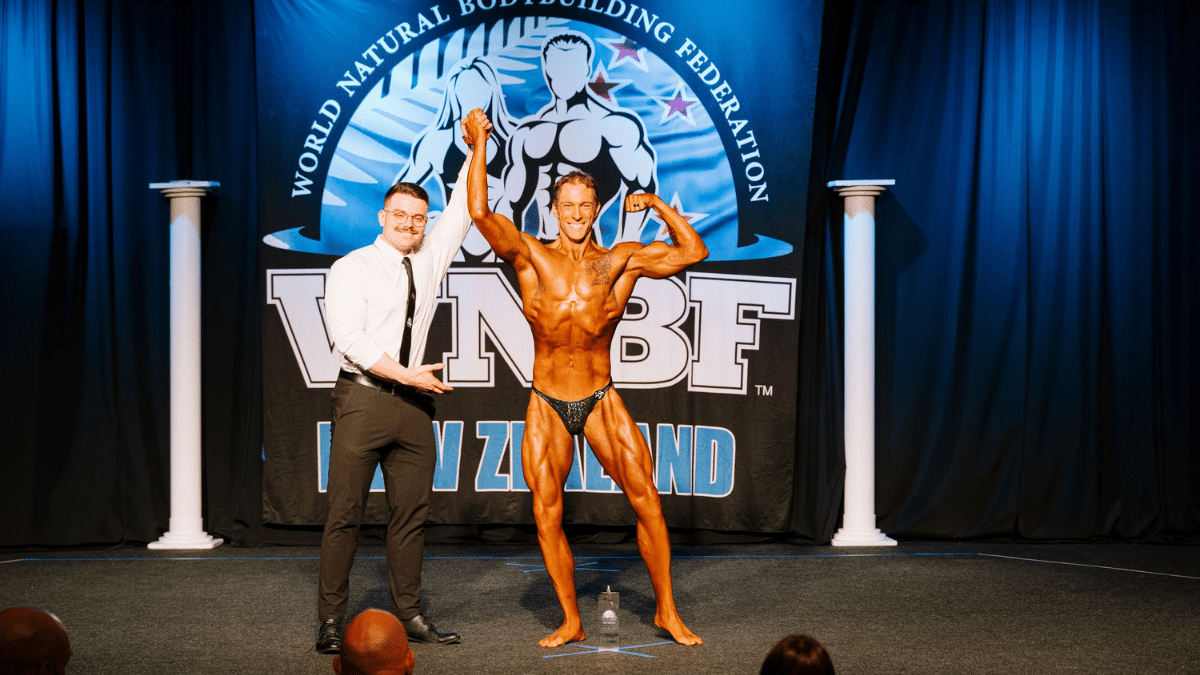
Peaking for Drug-Free Bodybuilding with Dr. Eric Helms
Introduction
Note: This piece was the MASS Research Review cover story for November 2023. If you want more content like this, subscribe to MASS.
Optimizing for Stage Appearance
Dr. Eric Helms kicked off his fifth competitive season in September with three competitions over consecutive weekends. This plan put him in the unique position of planning three back-to-back peak weeks, a prospect that would terrify a lot of competitors. The purpose of a peak week is to optimize the competitor’s appearance on stage. Peaking regimens typically include making simultaneous adjustments to exercise programming, carbohydrate intake, electrolyte balance, and water intake.
The Traditional Approach to Peaking
The traditional approach to peaking aims to decrease subcutaneous water retention and increase intramuscular fluid retention (or muscle “fullness”). Practically, this generally includes a depletion phase, during which the competitor consumes a low-calorie, low-carbohydrate diet, followed by a carbohydrate loading phase in an attempt to supercompensate glycogen storage. Typically, the next phase prescribes a moderate carbohydrate intake, water restriction, and, in some cases, decreased sodium and increased potassium.

Dr. Helms’ Approach to Peaking
In Dr. Helms’ experience, this practice doesn’t produce consistent results, as these variables are often changed haphazardly without any trial and error. Notably, some of these guidelines are borrowed from the enhanced bodybuilding world. While water restriction might be appropriate for competitors using performance-enhancing drugs that influence water retention, it doesn’t appear to be beneficial – and could be detrimental – for drug-free bodybuilders. There is an association between extracellular water and skinfold thicknesses, but dehydration can increase the retention of subcutaneous water.
Carbohydrate Loading and Fiber Intake
Carbohydrate loading does appear to effectively increase muscle size. The competitor’s response to carbohydrate “refeeds” throughout prep can inform the ideal quantity of carbohydrates, along with length and timing of the peak week loading phase. A depletion phase is probably unnecessary since, at the end of prep, most competitors are actively dieting on very low calories. If an individual is already in a deficit, he/she is arguably already depleted. One simple approach to peaking, which Dr. Helms used for his back-to-back shows, is to have a heavy loading day the Thursday prior to the show followed by a tapered intake leading into the show.
Nutrition Strategies for Peak Week
Individuals on very low-calorie diets typically consume a lot of fiber to promote satiety, which draws water into the intestinal tract. Since fiber can’t be stored as glycogen, it should be minimized during the carbohydrate loading phase (<20g/day). Sodium can be helpful on competition day for some individuals to acutely boost blood pressure and improve vascularity in response to a pump-up. However, the response to sodium should be tested beforehand, as this is not beneficial for everyone.
Post-Show Nutrition
Bodybuilders competing in consecutive weekly shows should be conservative about the post-show meal. Given that most individuals don’t eat a ton in the 1-2 meals leading into a morning or afternoon stage appearance on show day (typically ~700-800 kcal, in Dr. Helms’ case), there is room to consume a decent-sized – albeit reasonable – celebratory meal. He recommends focusing on the experience and the social engagement, as opposed to eating everything on the menu. Remember, you are about to enter another peak week!
Conclusion
While the peaking process is generally somewhat reproducible from show to show, it’s important to remember that you’re dealing with a dynamic system, a lot of assumptions, and a changing environment. It’s critical to accept a level of uncertainty. Finally, this process is psychologically challenging, and it can be difficult for even the most seasoned competitor to objectively evaluate his/her physique. It’s extremely valuable to lean on a coach or a fellow competitor to guide you through peak week, assess your physique under consistent lighting conditions with and without the spray tan, and help you make decisions that will prepare you to bring your best look to the stage.
FAQs
What is the traditional approach to peaking?
The traditional approach to peaking aims to decrease subcutaneous water retention and increase intramuscular fluid retention (or muscle “fullness”) by making simultaneous adjustments to exercise programming, carbohydrate intake, electrolyte balance, and water intake.
What is Dr. Helms’ approach to peaking?
Dr. Helms’ approach to peaking is to make adjustments to exercise programming, carbohydrate intake, electrolyte balance, and water intake in a more strategic and controlled manner, rather than relying on trial and error or borrowed guidelines from enhanced bodybuilding.
What is the importance of carbohydrate loading and fiber intake during peak week?
Carbohydrate loading does appear to effectively increase muscle size, and fiber intake should be minimized during the carbohydrate loading phase to avoid drawing water into the intestinal tract.
How should bodybuilders approaching consecutive weekly shows approach post-show nutrition?
Bodybuilders competing in consecutive weekly shows should be conservative about the post-show meal, focusing on a decent-sized – albeit reasonable – celebratory meal that won’t negatively impact their physique in the days leading up to the next competition.
Recommended Products:
-

Earth Fed Muscle Keystone Collagen Peptides Powder – Full Absorption – 38 Servings – Supports Hair, Skin, Nails, Joints & Post Workout Recovery -Sugar Free, Soy Free, Gluten Free. Paleo, Keto.
$7.30 Buy Now -
Sale!

Alani Nu BCAA SOUR PEACH RING | Branch Chain Essential Amino Acids | 2:1:1 Formula | Supplement Powder | Muscle Recovery Vitamins for Post-Workout | 30 Servings
Original price was: $39.99.$29.99Current price is: $29.99. Buy Now -

Revive MD Collagen Powder for Women & Men – Collagen Powder for Hair, Skin, & Nails – Collagen Supplements Powder with Biotin & Vitamin C for Healthy Collagen Production, Joints, & Tendons Support
$34.99 Buy Now