
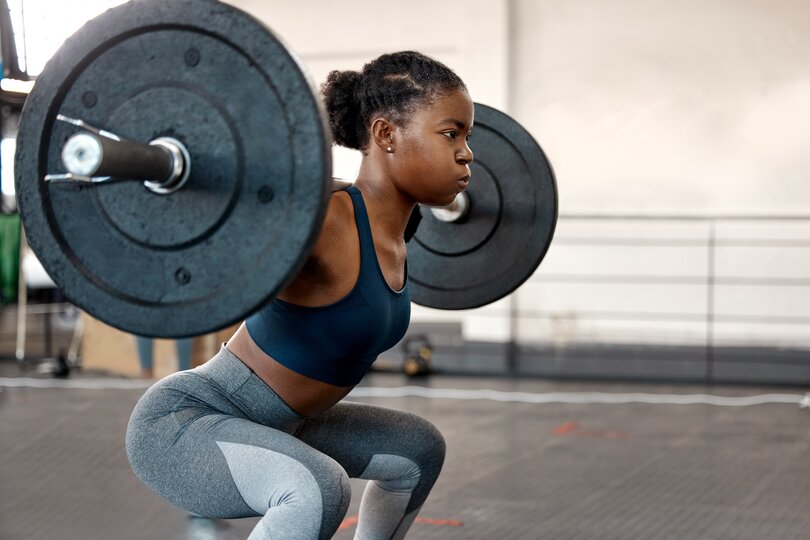
Which Squat Load Position is Right For You?
Understanding the Differences
Squats are a fundamental exercise in any weightlifting routine, but the way you load and perform the squat can greatly impact the effectiveness and safety of the exercise. While many lifters may have heard that back squats work more glutes and front squats work more quads, the truth is that loading positions can be dissected more profoundly than expected, with differences in muscle activation, joint angles, and joint force.
Front Squat vs. Back Squat
A study analyzed the muscle activation and trunk angle differences in twelve trained college-aged men during maximal lifting between the front and back squats. The findings showed that:
- Back squats could allow up to 32% more weight lifted relative to body weight compared to front squats.
- Despite front squats resulting in less overall weight lifted, the vastus medialis (a quadricep muscle) had higher muscle activation during the ascending phase.
- The semitendinosus (a hamstring muscle) had higher activation during the back squat than the front squat during the ascending phase.
- The back squat resulted in much lower hip angles and a forward-leaning torso compared to the front squat.
Lifters should consider the vast difference in loading potential between back and front squats when choosing between the two. Back-loaded squats should be prioritized if the lifter aims to lift as much weight as possible. However, front-loaded positions should be prioritized if the lifter needs to squat but reduces the overall load for recovery.

Low Bar Back Squat vs. High Bar Back Squat
A study tested the differences in muscle activation and joint angles at up to 70% 1RM between the low and high-bar back squats in twelve male experienced powerlifters. The findings showed that:
- All muscles experienced greater activation during the eccentric phase with the low bar compared to the high bar.
- During the concentric phase, the hamstrings, glutes, and low back extensors saw greater activation with the low-bar compared to the high-bar.
- The low-bar back squat saw greater anterior pelvic tilt, forward lean, and stance width compared to the high-bar.
Lifters looking to lift the most weight in a squat should prioritize the low bar, as it allows for greater posterior chain activation and higher loads. However, lifters who prioritize a more upright torso and less ankle mobility may prefer the high bar.
Safety Bar Squat vs. Traditional Barbell Squat
A study investigated the muscle activation and bar velocity differences between the safety bar and traditional barbell squats in 32 trained college-aged men. The findings showed that:
- The traditional bar had an 11% higher 1RM than the safety bar.
- Bar velocity remained the same in both types of bars up to 85% 1RM, when the traditional bar velocity slowed down at higher 1RM.
- No differences in muscle activation were found between bar types.
Lifters concerned with lifting the heaviest weights should prioritize traditional barbell squats, as they allow for higher loads. However, lifters who prioritize a more upright torso and less ankle mobility may prefer the safety bar.
In the End
There is no single correct squat loading position or variation as long as the training decision logically leads to the intended outcome. For example, if you want to lift the most load possible and choose a low-bar back squat, your training decision logically leads to the intended outcome.
More research is needed to conclude, but it seems that for now, the following points can be supported by the research:
- The absolute load lifted increases the more backward the load is positioned on the body.
- Load position affects joint positions in the body, such as the torso leaning more forward and the ankle bending less forward as the load shifts backward.
- Muscle activation seems to be the highest in the posterior chain as the load position is placed further back on the body.
Conclusion
When it comes to choosing the right squat loading position, it’s essential to consider the intended outcome and the lifter’s individual needs and goals. Whether you prioritize lifting the heaviest weights, working specific muscle groups, or maintaining proper form, there’s a squat loading position that’s right for you. By understanding the differences between front, back, low-bar, high-bar, and safety squats, you can make informed decisions that help you achieve your goals and minimize the risk of injury.
FAQs
Q: Which squat loading position is best for beginners?
A: As a beginner, it’s recommended to start with a front squat or a low-bar back squat, as they allow for a more upright torso and less load on the lower back. These positions also tend to be more forgiving for those new to weightlifting.
Q: Which squat loading position is best for advanced lifters?
A: Advanced lifters who prioritize lifting the heaviest weights may prefer back squats or low-bar back squats, as they allow for greater loads and more posterior chain activation. However, those who prioritize a more upright torso and less ankle mobility may prefer high-bar back squats or safety bar squats.
Q: Which squat loading position is best for athletes?
A: Athletes who prioritize explosive power and speed may prefer front squats or low-bar back squats, as they allow for greater rapid contractions of the quadriceps and glutes. However, those who prioritize strength and endurance may prefer back squats or safety bar squats.
Recommended Products:
-

Carlyle Prebiotic & Probiotic for Her | 50 Billion Active Organisms Per Serving | 50 Capsules | Vegetarian Supplement for Women
$9.99 Buy Now -
Sale!

Support Supplement for Men’s Health – Reduce Bathroom Trips, Promote Sleep, Better Bladder Emptying & Healthy Prostate, Beta Sitosterol (60ct, 1 Bottle)
Original price was: $34.99.$27.80Current price is: $27.80. Buy Now -

BodyHealth PerfectAmino Powder – BCAA and EAA Powder for Pre and Post Workout – Vegan Amino Acid Energy Drink Powder for Men and Women to Support Lean Muscle and Recovery – Lemon Lime – 20 Servings
$29.95 Buy Now